If you have found mold in your home, the first thing you probably want to know is what happens next and what it is going to cost. Both are fair questions. The honest answer on cost is that nobody can quote a real number without seeing the job, and this guide explains why. It also walks through what a proper remediation looks like from the first visit to the final check, so you can tell a thorough job from a shortcut.
Why mold remediation is not the same as cleaning
Wiping visible mold off a wall with a household cleaner usually makes the surface look better for a few weeks. It does not fix the reason the mold grew, and disturbing colonies without containment can push spores into the rest of the house. Remediation means removing the mold, correcting the moisture source that fed it, and controlling the work area so the problem does not spread while it is being fixed.
In the industry, that work is guided by the ANSI/IICRC S520 standard for professional mold remediation. It is the reference that certified firms build their procedures around, and it is a good thing to ask about when you are comparing companies.
The remediation process, step by step
- Inspection and moisture assessment. A technician looks at the visible growth, checks moisture levels in walls, subfloor, and framing, and traces the water or humidity source. Finding the source is the most important part of the visit, because mold comes back if the moisture stays.
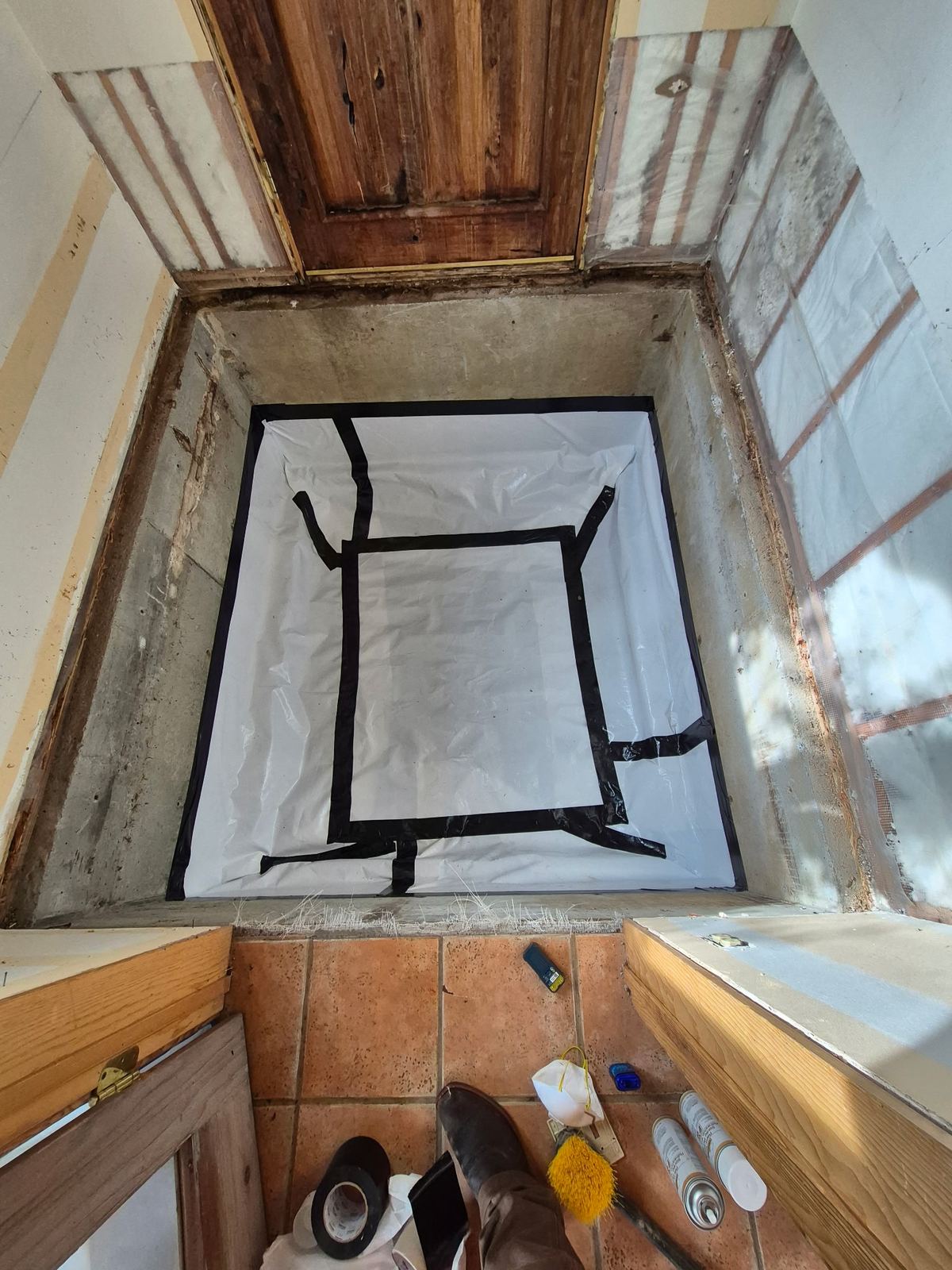
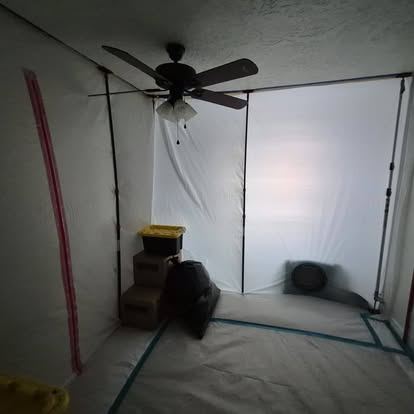
- Containment. The work area is sealed off with plastic barriers so spores cannot travel into clean rooms. Entry points are controlled, and in many jobs the area is held under negative air pressure so air flows into the work zone instead of out of it.
- HEPA air filtration. Air scrubbers with HEPA filters run throughout the job to capture airborne spores and fine particles that get stirred up during removal.
- Removal of affected materials. Porous materials that mold has grown into, such as drywall, insulation, and some carpet or padding, are usually removed and bagged. Structural wood can often be cleaned and treated in place instead of replaced.
- HEPA vacuuming and surface cleaning. Remaining surfaces are HEPA vacuumed and cleaned so settled spores and debris are actually removed, not just moved around.
- Fixing the moisture problem. Depending on the cause, this can mean drying out the structure, repairing a leak, correcting ventilation, or encapsulating a crawl space. Without this step, the rest of the work is temporary.
- Verification. Once the work is done, the area is checked to confirm it is clean and dry before containment comes down. Post-remediation testing can compare air samples against outdoor baseline levels if you want that extra confirmation.
What actually drives the cost
Two mold jobs that look similar in a photo can be very different in scope. These are the factors that move the price:
| Factor | Why it matters |
|---|---|
| Size of the affected area | More square footage means more containment, labor, and disposal. |
| Materials involved | Mold on framing can often be cleaned in place. Mold in drywall or insulation usually means removal and replacement. |
| Location | Attics and crawl spaces are tight, awkward work areas that take longer than an open room. |
| Moisture source | A one-time leak that is already fixed is a smaller job than an ongoing humidity problem that needs a permanent solution. |
| Testing | Air testing before or after the work adds a line item, but gives you documented results. |
| Rebuild | Remediation removes the damaged material. Putting drywall, insulation, and paint back is a separate cost. |
Why the Treasure Valley has its own mold patterns
Idaho's climate is dry compared to a lot of the country, which leads people to assume mold is not a local problem. In practice, it shows up in the same few places again and again. Crawl spaces sit on clay soils that hold moisture for weeks after a wet winter or a summer of lawn irrigation. Winter heating can cause condensation in attics when exhaust fans vent into the attic space instead of outside. And tightly sealed modern homes trade air with the outdoors less than older ones do, so indoor humidity lingers.
That is why so much of the mold work in Nampa, Boise, Meridian, and Caldwell traces back to crawl spaces, attics, and ventilation rather than to a dramatic flood.
Questions to ask any remediation company
- Are you IICRC certified for mold remediation, and can I verify it?
- Do you follow the ANSI/IICRC S520 standard?
- How will you contain the work area and filter the air?
- How will you find and fix the moisture source, not just remove the mold?
- What does the estimate cover, and what happens if the scope changes once walls are open?
- How will we confirm the job is finished and the area is clean?
What to do right now if you think you have mold
- Do not scrub, sand, or spray bleach on it. Disturbing it can spread spores.
- Turn off any fan that blows directly across the affected area.
- Fix or stop any active leak if you can do so safely.
- Take photos and note when you first noticed it and any recent water events.
- Get it looked at before it grows. Small problems are cheaper and simpler to fix.
D&S Environmental is an IICRC Certified Firm based in Nampa, with mold-certified technicians serving the Treasure Valley and surrounding Idaho communities. Inspections and estimates are free, so the only thing it costs you to find out what is going on is a phone call.