Idaho's high desert climate is rough on crawl spaces. Dense clay soils hold onto water from winter snowmelt and spring irrigation far longer than sandier soils do, and the Treasure Valley's wide swings between hot days and cold nights create a steady pressure difference between the ground and your living space. That pressure pulls moist, musty air up through your sub-floor — one of the most common paths mold gets into a home.
Why Treasure Valley crawl spaces hold onto moisture
Clay-heavy soils common across Ada and Canyon County absorb and release water slowly. After a wet winter or a summer of regular lawn watering, the ground beneath an open, vented crawl space can stay damp for weeks. A traditional vented crawl space is designed to let that moisture escape outdoors — but in practice, outside humidity often gets pulled in faster than it gets pushed out, especially overnight when temperatures drop and condensation forms on cool surfaces.
What encapsulation actually does
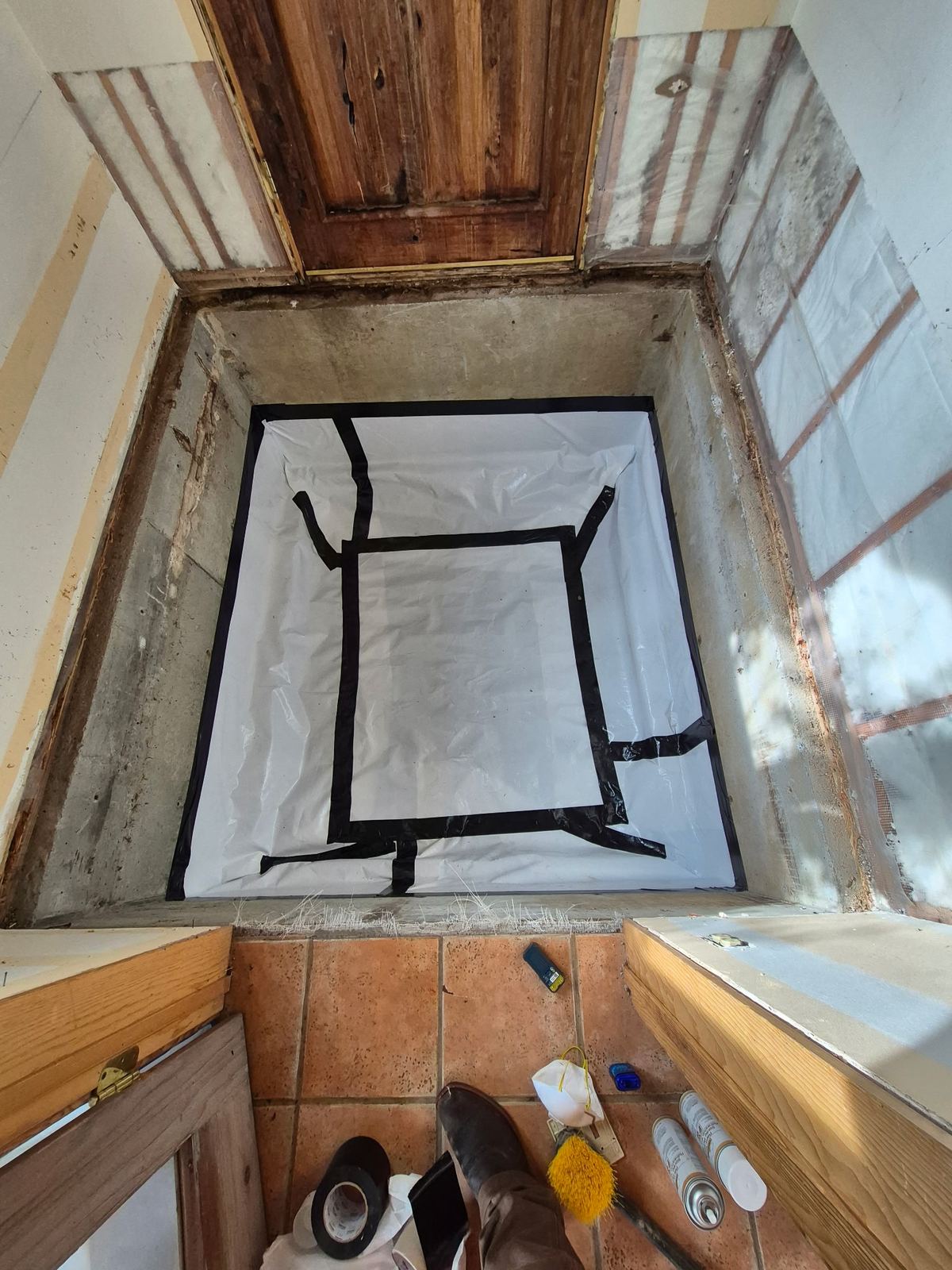
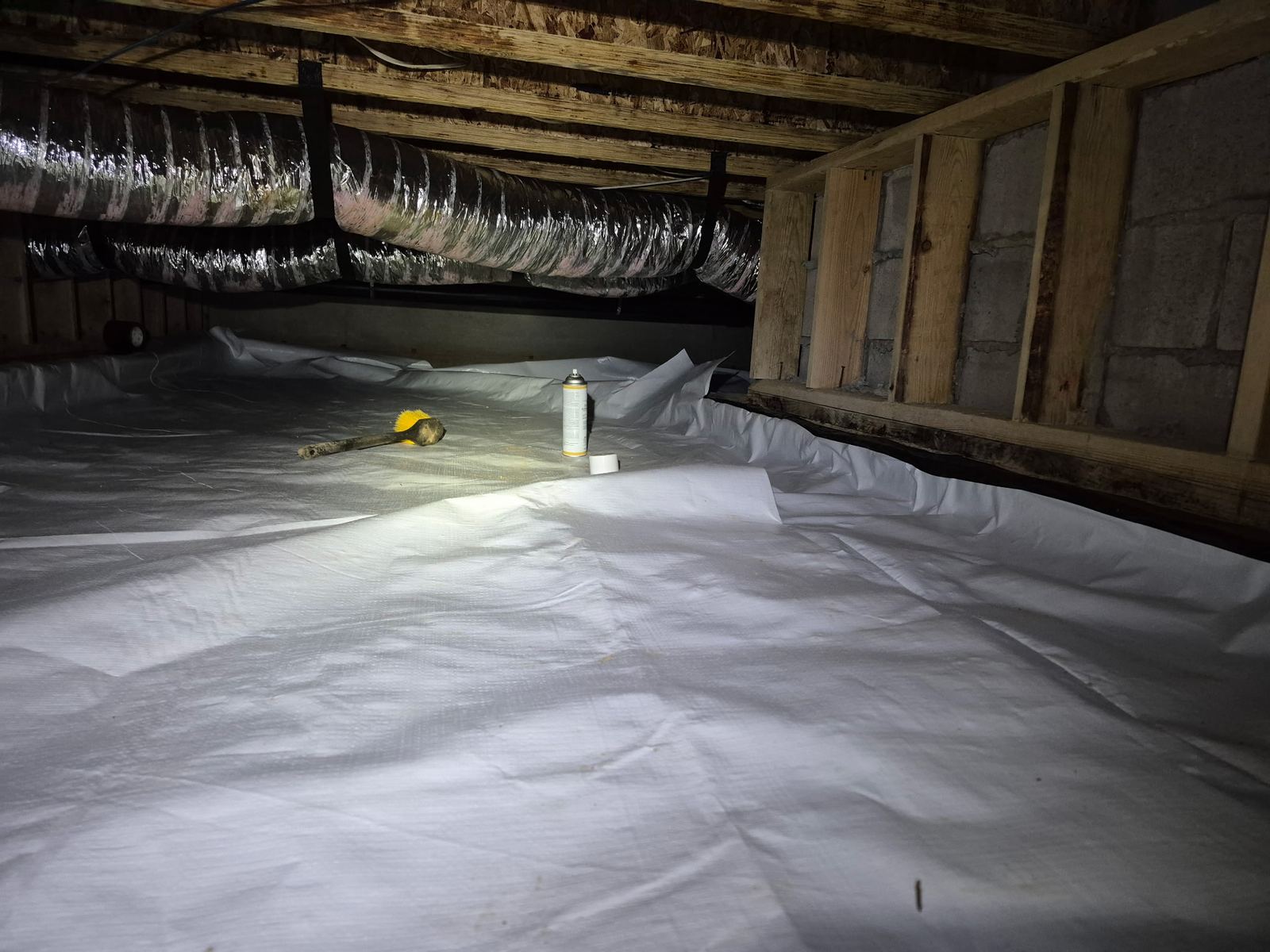
Encapsulation seals the crawl space off from the soil and outside air with a heavy-duty vapor barrier, so the space stays dry regardless of what's happening in the yard or the weather. It's a mechanical fix for a mechanical problem — no chemicals masking the symptom, just removing the moisture source.
- Clear and level the ground. Debris, old insulation, and anything sharp gets removed, and the dirt floor is leveled so water can't pool in low spots.
- Seal the perimeter walls. A heavy vapor barrier runs up the foundation walls, stopping a few inches below the sill plate so a clear termite inspection gap is preserved, then it's fastened and sealed at the seams.
- Wrap penetrations. Plumbing lines, support piers, and columns get individually wrapped and taped so moisture can't track in around them.
- Seal the floor. Floor sheeting goes down with overlapping seams, taped for a continuous, sealed surface across the whole crawl space.
Vented vs. encapsulated: what typically changes
| Metric | Vented crawl space | Encapsulated crawl space |
|---|---|---|
| Relative humidity | Often 70–95% | Typically 45–55% |
| Sub-floor moisture risk | Elevated — favors mold & rot | Substantially reduced |
| Cold-air infiltration | Higher — cold, damp air enters freely | Lower — sealed envelope |
| Pest access | Open vents are an easy entry point | Sealed exterior limits access |
Every crawl space is different, and the right fix depends on your foundation, existing moisture levels, and how the space is currently ventilated. A free inspection tells you exactly what's going on under your home before anything gets recommended.